

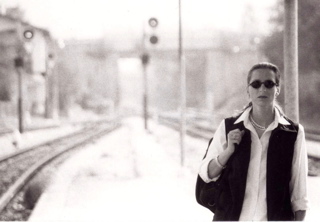
photo by Laura Burke
Train travel in Italy is cheap compared to surrounding countries. But there’s a catch: major rail lines in Italy tend to have a vast ridership and seats during “rush hours” can be difficult to find on Italian trains. Below are some basics. I strongly recommend making your reservations in advance (often can be done within 60 days of travel) in either first or second class.
Italy Train Routes Map
So where can you go on the Italian train? Check this Italy Rail Map on Europe Travel.
Types of Trains in Italy
The list below is prioritized by cost and speed, expensive and fast trains first.
Eurostar (ES or Treni Eurostar Italia)
Italy’s premier train, not to be confused with the Eurostar that plies the English channel (the Italian Eurostar was first to claim the name). Seat reservations on Eurostar Italia are manditory. Eurostar travels swiftly between major Italian cities.
Intercity and the newer Intercity Plus trains
Relatively fast trains that run the length of Italy, stopping at the large cities. First and second class service is available. First class coaches offer slightly better seats and are generally less populated. Seat reservations are compulsory on the Intercity Plus trains, and the fee is included in the ticket price. Seat reservations can be made for some Intercity trains, too.
Regionale (Regional Trains)
These are the local trains, often running around work and school schedules. They are cheap and usually reliable–but seats can be hard to find on major routes. Many regional trains have only second class seats, but if available, consider first class, asking for Prima Classe, per favore, it’s less likely to be full especially during commute times.
 Journeys Viaggio
Leave a comment