December 14, 2011

Saffron anyone ? (nice holiday gift idea for the cook)

Saffron

Saffron is a spice derived from the flower of Crocus sativus, commonly known as the saffron crocus.Saffron’s bitter taste and iodoform- or hay-like fragrance result from the chemicals picrocrocin and safranal. It also contains a carotenoid dye, crocin, which imparts a rich golden-yellow hue to dishes and textiles. It has been traded and used for over four millennia. Iran now accounts for the lion’s share, or around 90%, of world production. Research into its many possible medicinal benefits, ranging from cancer suppression to mood improvement and appetite reduction, is ongoing.

Did you know that saffron is cultivated in one of Italy’s most famous hill towns….San Gimignano…known for it’s towers, vineyards, & sunflower fields. See this fascinating excerpt of an article just published in Florence’s local ragsheet.
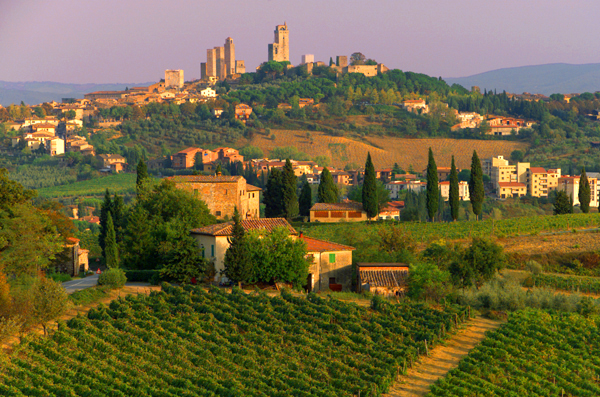
San Gimignano

“Saffron has long been one of the world’s most expensive foods. The carefully picked red stigmas of the lilac-coloured crocus flower have been cultivated, fought over and treasured for centuries. Cleopatra used to bathe in saffron-infused water, Alexander the Great used it to treat battle wounds and the Ancient Romans planted it across their entire empire. While the plant is native to central Asia, the spice was already well known in Italy in the Middle Ages, introduced through trade in port cities like Venice and Genoa. Today, saffron in Italy is grown most notably in Sardegna, Abruzzo and Tuscany, with San Gimignano the region’s saffron capital. Documents date saffron in San Gimignano trade routes to the 1200s, where it was treated as currency and contributed to the city’s wealth. The saffron of San Gimignano is cultivated using natural methods and sold whole, in crimson-red threads, instead of as a powder. In 2005, it was awarded Denominazione di Origine Protetta (DOP) certification. This autumnal plant likes the sun and blooms for a very short period in late October or early November, where it requires a speedy and labour intensive harvest. Flowers are picked early in the morning and the stigmas removed before the blooms wilt. Each flower contains only three stigmas. One kilogram of fresh flowers produces just 72 grams of fresh stigmas, or a mere 12 grams of dried stigmas. Luckily, a little goes a long way to impart a rich golden yellow colour and just enough of its characteristic, hay-like flavour to food. There is no sense in trying to impress people by adding extra saffron, as it will taste bitter if there is too much. For a dish to serve four people, a pinch of 10 strands is plenty. Saffron can be used in many recipes from liqueurs to desserts and is wonderful in rice dishes, like in this adaption of a risotto milanese, which makes the most out of autumn’s bounty.”

December 2, 2011

Christmas Season in Rome

Rome is a top Italian city to visit during the Christmas holiday season and the place where the celebration of Christmas originated. The first Christmas mass was said at the Church of Santa Maria Maggiore and the earliest known permanent nativity was created for the Rome Jubilee in 1300.
The Rome Christmas sights during the Christmas holiday season run from early December through Epiphany on January 6.

Piazza Navona Christmas Market

Piazza Navona in December, Rome’s famous Baroque square, is transformed into a huge Christmas market. You’ll find stands selling all kinds of Christmas sweets, toys, nativity figures, decorations, and gifts. There’s a merry-go-round and Babbo Natale, Father Christmas, makes an appearance to delight the kids. A large nativity scene is erected in the square later in December, too.

Each year a huge Christmas tree is erected in Saint Peter’s Square. A life-size nativity is also set up but usually not unveiled until Christmas Eve. Thousands of visitors flock to Saint Peter’s Square when the Pope says midnight mass on Christmas Eve inside Saint Peter’s Basilica (in the square it’s shown on big screen TVs) and delivers his Christmas message at noon on Christmas Day from the window of his apartment above the square. December 13 there’s a colorful parade to Saint Peter’s Square for Santa Lucia Day.
Christmas trees are really not an Italian tradition but are starting to become more popular. In addition to the tree in Saint Peter’s Square, two of the largest Christmas trees in Rome are usually erected in Piazza Venezia and next to the Colosseum. There’s also a tree in the area in front of the Museums on the Capitoline Hill. Some shops, hotels, and restaurants display small trees.

Rome’s main streets are decorated with lights and often have entertainment by roving musicians and vendors selling roasted chestnuts. A good place to go is the shopping streets near Piazza di Spagna. An outdoor ice skating rink, open daily from 10:00 to midnightis set up near Castel Sant’Angelo where there’s also a small Christmas market.

Rome has a large Jewish population and Hanukkah is another important holiday celebrated in December. A large Menorrah is erected in Piazza Barberini and one candle is lit each night during the Hanukkah season.

November 29, 2011

New Video Slideshow- Italian Lake District in October!

Follow the link for a taste of bella Lake Como and some of the surrounding Lake District!

November 3, 2011

November in Italy

autumn in Tuscan woodlands


All Saints Day is celebrated November 1 and is a national holiday in Italy. On All Souls Day, November 2, Italians bring flowers to cemeteries to honor deceased relatives. During November you’ll find some music and cultural festivals and performing arts seasons are starting.
Truffles are the star of November Festivals in Italy. Many truffle fairs are held in northern (Piedmonte for one) and central Italy. You’ll also find chestnut festivals in many towns and villages during November. Restaurants will often have special meals highlighting truffles, chestnuts, or wild mushrooms especially on Sundays. Fall is a great time for eating in Italy !!! Yum Yum.

San Miniato Truffle Fair – La Sagra del Tartufo Bianco, a truffle fair, is held in the medieval hill town of San Miniato in the Pisa Province of Tuscany on the second, third and fourth weekends in November. 25% of Italy’s white truffles are produced in this territory and November is the heart of truffle gathering season. There will be food and craft stands and entertainment and restaurants will feature truffle menus. If you haven’t had truffles, this is a great place to get an introduction.

……………………….

If traveling to Tuscany or Liguria…please be aware that shortly after flooding in Rome, now unusually heavy rains have flooded parts of Liguria and northern Tuscany, including the popular Cinque Terre villages. Roads washed away leaving two of the villages, Monterosso and Vernazza, cut off, according to news reports. Parts of the A12 and A15 autostrada are currently closed as well as other roads in the area and the rail line is closed between la Spezia and Genoa.
Cinque Terre hiking trails are likely to be closed for awhile, too, so check the Cinque Terre National Park web site for updates before you go.

October 31, 2011

Happy Halloween !

Happy Halloween

How did Halloween come to be ?

The first evidence of the word Halloween was in the 16th century and it represented a Scottish variant of All-Hallows-Even which was the night before All Hallows Day.
‘Halloween’ and many of the traditions still practiced today such as wearing costumes, trick-or-treating and carving pumpkins all derive from the old the Old English era. The origin of Halloween is commonly linked to the Celtic festival of Samhain, which celebrates the end of the “lighter half” of the year and the beginning of the “darker half” and is sometimes regarded as the Celtic New Year.
The ancient Celts believed that during the period of Samhain (Halloween), the border between this world and the ‘the world of the dead’ becomes thiner, allowing spirits (both harmless and harmful) to pass through. The family’s ancestors were honoured and invited home while harmful spirits were warded off. It is believed that people wore costumes and masks to ward off harmful spirits with the purpose to disguise themselves as a harmful spirit in order to avoid harm.
Trick-or-treating is a customary tradition for children on Halloween, with children going from house to house, asking for treats such as candy or money with the question …… “Trick or treat?”. The word “trick” refers to a threat to perform mischief on the home-owner or their property if no treat is given.
The carving of pumpkins on Halloween is a North American tradition.

Halloween has always been my favorite holiday…possibly because my birthday falls on Halloween !!

October 28, 2011

HALLOWEEN in ITALY

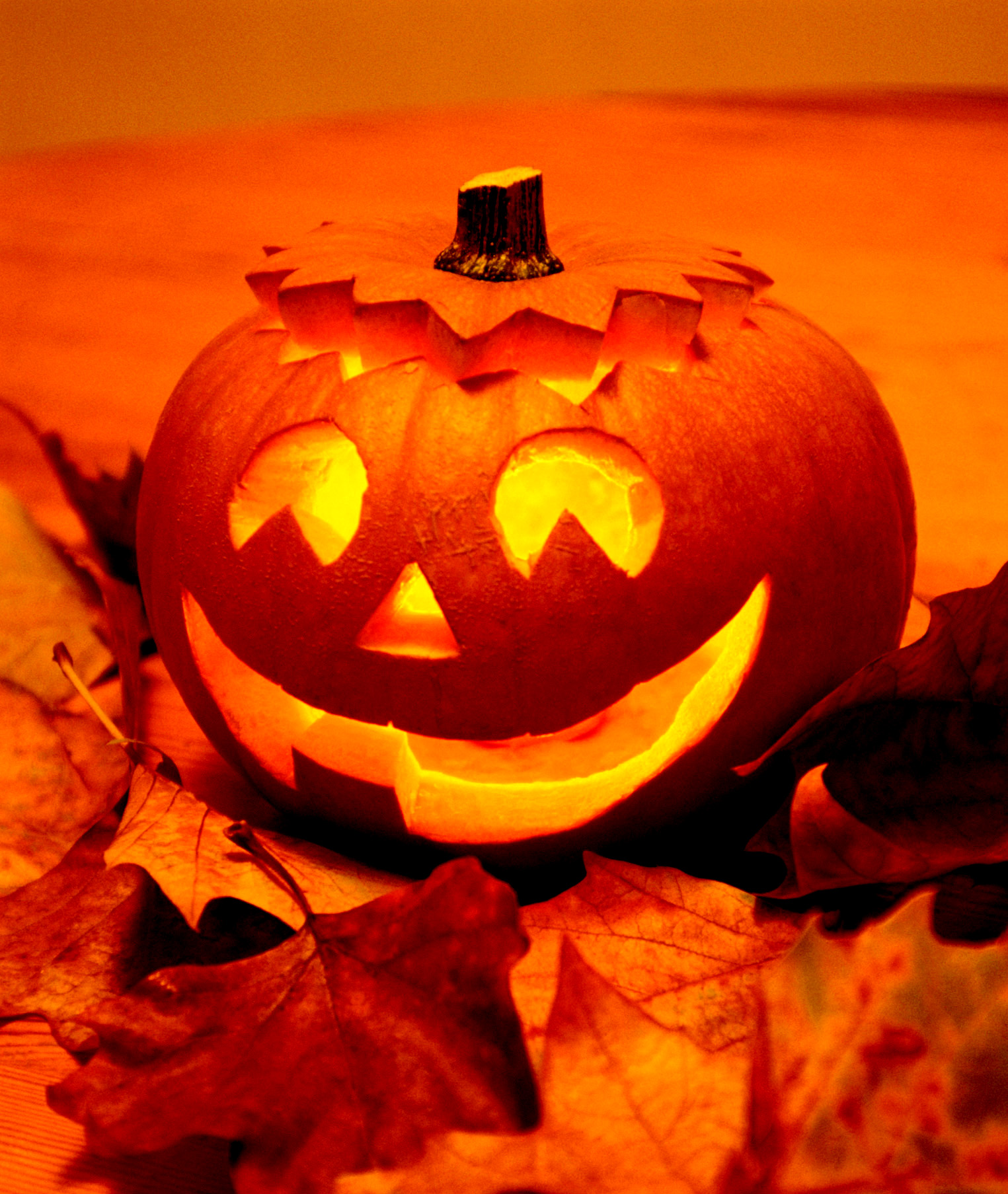
Jack-o-Lantern

Trick…or Treat …or Party ?
Halloween is upon us again and Florence is ready with events, parties, and even a haunted house.

Every year by mid-October we see more store windows sporting fake cobwebs and plastic pumpkins than in the previous year. Many Italian retailers are getting into the spirit (pun intended) of the holiday, albeit later than their American counterparts. Numerous theme and costume parties are now offered and there’s even a haunted house in Florence this year. Still, you’ll have to adapt certain traditions to life in Italy. Trick-or-treating door-to-door is rare, although some areas or condominiums may organize an official doling out of candies, strictly for the little ones. The massive quantities of halloween candy is not available like here in the US. Pumpkins for carving are hard to find and expensive, since the zucca grown in Italy is best suited for eating. On the positive side, Italy offers a bonus holiday on November 1, All Saints’ Day (Tutti Santi), so you can sleep off the effects of Halloween night and then celebrate with the huge traditional lunch that marks every statutory holiday in Italy. Maybe this would be a nice addition to the American ‘holiday’ calendar, providing one more day to rake up all of those glorious autumn leaves !

Did I mention in earlier posts, that late autumn is a wonderful time to experience Italy…and great value?